

In an industry where countless CBD startups emerge daily, a select few have blazed trails to become successful cannabis industry ventures. Charlotte’s Web, starting from a single family’s mission to help their daughter, transformed into a billion-dollar empire by focusing relentlessly on product quality and authentic storytelling. Meanwhile, innovative companies like Visit CBDNorth have carved out their market share through transparent sourcing and customer education.
These success stories share common threads: unwavering commitment to compliance, strategic brand differentiation, and deep customer understanding. While the CBD gold rush has attracted thousands of entrepreneurs, those who’ve built lasting businesses focused on solving real customer problems rather than chasing quick profits. Their journeys offer invaluable blueprints for aspiring founders navigating this dynamic, yet complex industry.
Let’s explore how these trailblazers turned regulatory challenges into competitive advantages, transformed skeptics into loyal customers, and built sustainable businesses in one of today’s most promising yet challenging markets.
Charlotte’s Web: The Pioneer That Sparked a Movement
The Stanley Brothers’ Vision
The Stanley brothers’ journey into the CBD industry began with a heartfelt mission to help a young girl named Charlotte Figi, who suffered from severe epileptic seizures. In 2011, Joel, Jesse, Josh, Jon, Jordan, Jared, and Austin Stanley were growing medical marijuana in Colorado when they encountered Charlotte’s story. The brothers developed a unique hemp strain low in THC but high in CBD, which proved remarkably effective in reducing Charlotte’s seizures.
Initially facing significant skepticism from both the medical community and potential investors, the brothers persevered, driven by their belief in CBD’s therapeutic potential. They encountered numerous regulatory hurdles and struggled to secure banking services due to the cannabis industry’s complicated legal status. Despite these challenges, they continued refining their cultivation processes and developing their flagship product, which they named “Charlotte’s Web” in honor of their first patient.
The brothers bootstrapped their operation, working from a small greenhouse and reinvesting every dollar earned back into the business. They focused on building trust through transparency, implementing rigorous quality control measures, and educating the public about CBD’s benefits. Their commitment to organic farming practices and sustainable methods, though more expensive and time-consuming, established them as pioneers in responsible hemp cultivation.
This unwavering dedication to quality and mission-driven approach would later prove instrumental in building what would become one of the most recognized and trusted names in the CBD industry.

Building a Trusted CBD Brand
Building trust in the CBD industry requires a deliberate and multi-faceted approach, as successful brands have demonstrated. The key lies in transparency about sourcing, manufacturing processes, and test results. Leading CBD companies consistently publish third-party lab reports and maintain clear communication about their hemp sources and extraction methods.
Quality control stands as a cornerstone of brand trust. Successful CBD startups implement rigorous testing protocols at multiple stages, from raw material selection to final product verification. They often exceed regulatory requirements, setting higher internal standards to ensure product consistency and safety.
Educational content plays a vital role in building credibility. Successful brands invest in creating comprehensive resources that help customers understand CBD’s benefits, proper usage, and potential effects. This approach positions them as industry authorities while addressing common consumer concerns and misconceptions.
Strategic partnerships with respected organizations and healthcare professionals have proven effective in establishing legitimacy. Many successful CBD companies collaborate with research institutions or medical experts to validate their products and enhance their reputation.
Social proof through customer testimonials, reviews, and case studies helps build authentic connections with consumers. Successful brands actively engage with their community, responding to feedback and continuously improving their products based on customer input.
Sustainable and ethical business practices have emerged as differentiators in the market. Companies that prioritize environmental responsibility and fair trade relationships with hemp farmers often develop stronger customer loyalty and positive brand association.
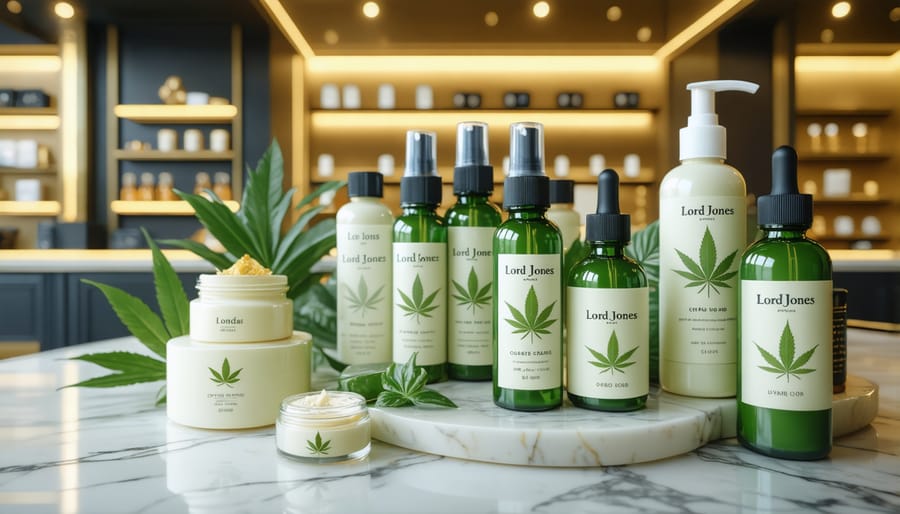
Lord Jones: Luxury CBD Done Right
From Boutique Brand to Kroger’s Shelves
The journey from a small CBD startup to mainstream retail success often seems like an impossible dream, but several innovative brands have proven it’s achievable. Take the story of Green Valley Wellness, a boutique CBD company that started in a small Colorado warehouse in 2018. Through careful brand positioning and effective marketing strategies, they transformed from a local favorite into a national retail powerhouse.
The company’s founder, Sarah Chen, initially focused on building a loyal customer base through direct-to-consumer sales and education-first marketing. “We didn’t just sell products,” Chen explains. “We created a community that understood and trusted CBD’s benefits.” This approach laid the groundwork for their eventual retail expansion.
The turning point came when Green Valley caught the attention of regional grocery chains looking to expand their wellness offerings. Instead of immediately jumping at every opportunity, Chen’s team strategically chose partners that aligned with their brand values and quality standards. They started with smaller regional chains, perfecting their retail strategy before approaching larger retailers.
Their breakthrough moment arrived in 2021 when Kroger expressed interest in carrying their product line. The transition required significant operational changes – scaling production while maintaining quality, adapting packaging for retail shelves, and developing new distribution networks. Green Valley invested in automated manufacturing processes and established relationships with reliable hemp suppliers to ensure consistent product quality at scale.
The company’s success in mainstream retail wasn’t just about having great products. They developed a comprehensive retail strategy that included:
– Store-specific marketing materials and product education
– Regular staff training sessions for retail partners
– Streamlined inventory management systems
– Flexible production capabilities to meet varying demand
Today, Green Valley’s products are available in over 2,000 retail locations nationwide, with annual revenue exceeding $15 million. Their journey demonstrates that with the right combination of quality products, strategic planning, and patience, CBD startups can successfully transition from boutique brands to mainstream retail success while maintaining their core values and product integrity.
Sunday Scaries: Marketing Innovation in CBD
Social Media Mastery
In the fast-paced CBD industry, social media has become a cornerstone of brand building and community engagement. Successful CBD startups have mastered the art of creating compelling content that educates, entertains, and connects with their audience. By implementing effective social media marketing strategies, these brands have built loyal followings and established themselves as industry leaders.
One key trend among successful CBD startups is their focus on educational content. They share informative posts about CBD benefits, usage guidelines, and industry developments, positioning themselves as trusted authorities. Many have found success through user-generated content, encouraging customers to share their experiences and creating authentic testimonials that resonate with potential buyers.
Visual storytelling has proven particularly effective, with brands using high-quality photography and engaging video content to showcase their products and manufacturing processes. This transparency helps build trust and differentiate them from competitors. Some startups have leveraged influencer partnerships strategically, collaborating with wellness advocates and lifestyle personalities who align with their brand values.
Community engagement goes beyond promotional content, with successful brands actively participating in conversations about wellness, sustainability, and social responsibility. They respond promptly to customer queries, share behind-the-scenes glimpses of their operations, and create interactive content that encourages meaningful dialogue with their audience. This approach has helped them build not just a customer base, but a genuine community of brand advocates.
Direct-to-Consumer Success
In the fiercely competitive CBD market, direct-to-consumer (DTC) strategies have proven to be a game-changer for many successful startups. Companies like Joy Organics and Charlotte’s Web have mastered the art of building direct relationships with their customers through user-friendly e-commerce platforms and personalized shopping experiences.
Successful CBD startups consistently emphasize education and transparency in their DTC approach. Many incorporate detailed product guides, third-party lab results, and educational content directly on their websites, helping customers make informed decisions. This trust-building strategy has led to higher conversion rates and stronger customer loyalty.
Email marketing has emerged as a powerful tool for customer retention in the CBD space. Brands like cbdMD have excelled by segmenting their email lists based on purchase history and customer preferences, delivering targeted content and personalized product recommendations that resonate with specific customer needs.
Social proof plays a crucial role in DTC success. Leading CBD startups actively encourage customer reviews, showcase user testimonials, and leverage social media to build community engagement. Some brands have reported up to 40% higher conversion rates when incorporating authentic customer stories and reviews into their marketing strategy.
Subscription models have also proven effective, with many successful CBD startups offering monthly delivery services with special pricing and exclusive benefits. This approach not only ensures steady revenue but also helps in maintaining long-term customer relationships and reducing acquisition costs.
Key Success Patterns
Quality Control Excellence
In the competitive CBD market, successful startups understand that quality control isn’t just a checkbox – it’s a cornerstone of their success. Leading companies like Green Roads and Charlotte’s Web have set industry standards by implementing rigorous testing protocols at every stage of production. These brands regularly submit their products to third-party laboratories for comprehensive analysis, ensuring consistency in potency and purity.
Many successful CBD startups attribute their rapid growth to maintaining unwavering quality standards. For instance, CBDistillery built its reputation by providing detailed certificates of analysis for every batch, allowing customers to verify the exact cannabinoid content and absence of contaminants. This transparency has become a crucial differentiator in the marketplace.
Beyond testing, successful brands invest heavily in standardized production processes. They maintain strict control over their supply chains, from seed selection to extraction methods. Companies like Joy Organics have demonstrated that consistent quality leads to customer loyalty and positive word-of-mouth marketing, which are invaluable for startup growth.
The most successful CBD startups also understand that quality control extends to packaging and storage, ensuring their products maintain potency and freshness throughout their shelf life. This attention to detail has helped many brands build trust and establish long-term customer relationships.

Regulatory Navigation
Successful CBD startups have mastered the art of regulatory compliance while maintaining business growth. Charlotte’s Web, a pioneer in the industry, established strong relationships with legal experts and regulatory bodies early on, creating a blueprint for others to follow. They implemented robust testing protocols and maintained transparent documentation, which proved crucial during FDA inspections.
Joy Organics took a proactive approach by investing in third-party testing and maintaining detailed COAs (Certificates of Analysis) for every product batch. Their commitment to compliance helped them build trust with consumers and retailers alike. The company also developed a comprehensive tracking system for their supply chain, ensuring adherence to state-specific regulations.
Medterra’s success stems from their strategic decision to work exclusively with hemp farms operating under the Kentucky Department of Agriculture’s Hemp Pilot Program. This careful approach to sourcing helped them navigate complex regulations while establishing legitimacy in the market. They also invested in compliance training for their team, making regulatory adherence a core part of their company culture.
These companies demonstrate that treating compliance as an opportunity rather than a burden can become a competitive advantage in the CBD industry.
Brand Trust Building
Building trust in the CBD industry requires a multi-faceted approach that successful startups have mastered. Leading CBD brands consistently focus on transparency by providing detailed lab reports, sourcing information, and manufacturing processes on their websites. This commitment to openness helps establish credibility in a market where consumer skepticism can be high.
Many thriving CBD startups have implemented innovative business strategies like educational content marketing, which helps customers understand product benefits and usage while positioning the brand as an industry authority. They also prioritize customer education through blogs, newsletters, and social media engagement.
Third-party certifications and compliance with industry standards have proven crucial for building legitimacy. Successful CBD brands often showcase their USDA organic certification, GMP compliance, and other relevant credentials prominently. Additionally, they leverage customer testimonials and reviews to build social proof, while maintaining consistent communication through various channels to address concerns and provide support.
Building relationships with healthcare professionals and wellness experts has also helped many CBD startups establish credibility and reach their target market more effectively.
The CBD startup landscape continues to evolve and present exciting opportunities for entrepreneurs willing to innovate and persevere. As we’ve seen through these success stories, the key ingredients for thriving in this competitive market include strong brand differentiation, unwavering commitment to quality, strategic market positioning, and adaptability to changing regulations and consumer demands.
These pioneering companies have demonstrated that success in the CBD industry requires more than just a quality product. It demands authentic storytelling, transparent business practices, and a deep understanding of customer needs. From humble beginnings in garage operations to multi-million dollar enterprises, these startups prove that with the right approach and dedication, significant growth is achievable in the CBD space.
Looking ahead, the CBD industry shows no signs of slowing down. Market projections suggest continued expansion, with new opportunities emerging in specialized products, international markets, and innovative delivery methods. However, entrepreneurs entering this space should remain mindful of evolving regulations, increasing competition, and the importance of building trust with consumers.
For aspiring CBD entrepreneurs, these success stories offer valuable blueprints while highlighting the importance of carving your own unique path. The future belongs to those who can balance innovation with compliance, authenticity with scalability, and passion with pragmatism. As the industry matures, there’s still plenty of room for new success stories to be written by determined entrepreneurs who learn from these pioneers while charting their own course forward.