
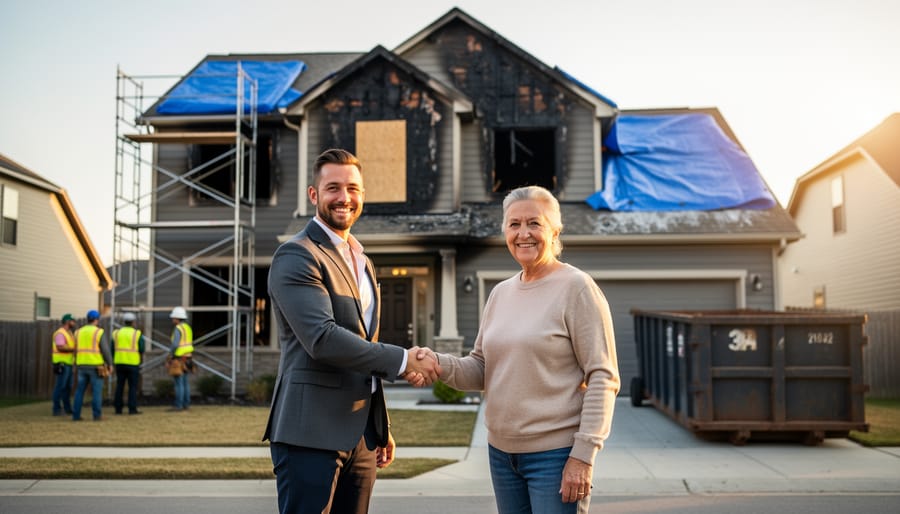
Every year, thousands of homeowners face devastating losses from fire damage, left scrambling to rebuild or sell properties that traditional buyers won’t touch. Enter a new wave of specialized startups transforming fire damaged property acquisition into a viable business model—one that provides desperate homeowners with quick exits while creating profitable opportunities for savvy entrepreneurs.
These innovative companies operate at the intersection of real estate investment and social impact, solving homeowner challenges that conventional markets ignore. Unlike traditional house flippers who cherry-pick pristine properties, fire damage specialists dive into complex scenarios involving insurance claims, structural assessments, and extensive renovations that intimidate most investors.
The business model hinges on speed and expertise. Startups in this space offer cash purchases within days, handling all paperwork and relieving homeowners from months of uncertainty. They profit through strategic rehabilitation and resale, leveraging relationships with contractors, insurance adjusters, and restoration specialists to maximize returns on properties others consider total losses.
What makes this niche particularly compelling for aspiring entrepreneurs is the reduced competition and genuine value creation. While established investors chase pristine properties in bidding wars, fire damage specialists serve an underserved market segment where motivated sellers desperately need solutions. The barrier to entry requires knowledge rather than massive capital—understanding fire damage assessment, restoration costs, and local building codes matters more than having millions in reserve.
This emerging sector proves that profitable businesses can arise from solving society’s most pressing problems.
Why Traditional Home Sales Fail After Fire Damage
When a fire tears through a home, the physical damage is only the beginning of a homeowner’s challenges. The traditional real estate market, designed for move-in-ready properties, often becomes an insurmountable barrier for those trying to sell fire-damaged homes.
The most immediate obstacle is buyer hesitation. Most homebuyers envision their dream home, not a reconstruction project requiring months of work and substantial investment. Fire damage triggers emotional responses beyond typical fixer-upper concerns. The lingering smell of smoke, visible char marks, and unknown structural issues create psychological barriers that traditional buyers simply won’t cross, even when offered significant discounts.
Financing presents an equally daunting challenge. Conventional mortgage lenders rarely approve loans for properties with fire damage, viewing them as high-risk investments. This eliminates the vast majority of potential buyers who depend on financing. Cash buyers in the traditional market expect deep discounts to compensate for renovation costs and risks, often offering pennies on the dollar compared to pre-fire values.
The repair-before-sale requirement adds another layer of complexity. Real estate agents typically advise homeowners to restore properties to marketable condition before listing. However, this demands upfront capital many homeowners don’t have, especially when insurance settlements fall short or take months to materialize. The timeline stretches endlessly as contractors schedule work, inspections pile up, and permit approvals drag on.
Meanwhile, property taxes, insurance premiums, and mortgage payments continue accumulating on an uninhabitable property. For homeowners facing financial strain from displacement costs and temporary housing, this holding pattern becomes financially devastating. The traditional sale process that works smoothly for standard homes transforms into a nightmare scenario for fire-damaged properties, creating the perfect market gap for innovative startups to fill.
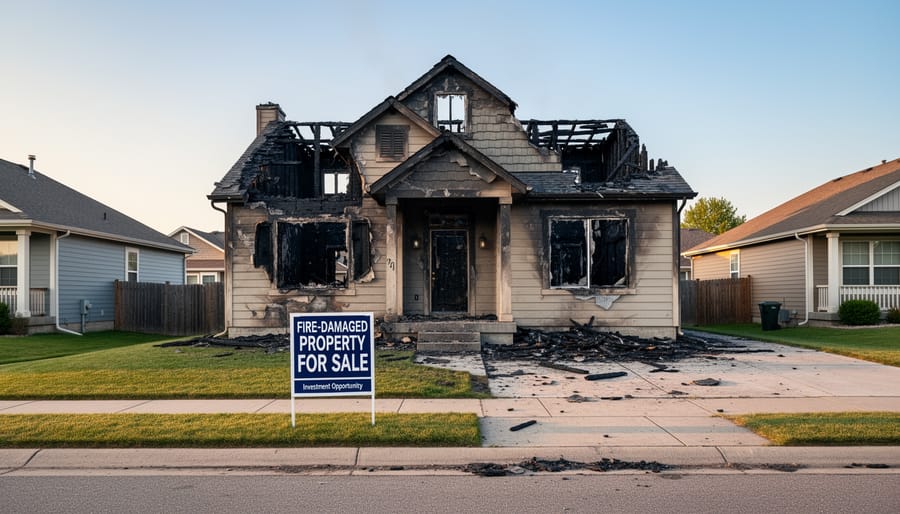
The Business Model Behind Fire Damage Home Buying Startups
The business model driving fire damaged home buying startups centers on a simple but powerful premise: buy distressed properties at significant discounts, rehabilitate them efficiently, and either resell or rent for profit. What makes this model particularly compelling is the speed and certainty these companies offer desperate homeowners facing the overwhelming aftermath of fire damage.
Here’s how the economics work. These startups typically acquire properties at 40-60% below market value, accounting for damage severity, repair costs, and the urgency sellers face. Unlike traditional buyers who struggle to secure financing for damaged properties, these companies use private capital, investor pools, or credit lines to make all-cash offers that close in as little as seven days.
Revenue streams vary by strategy. Some startups follow a quick-flip model, partnering with established renovation crews to complete repairs within 60-90 days before reselling. Others hold properties as rental investments, building portfolios that generate recurring income. Companies like Sundae and We Buy Fire Damaged Houses have built hybrid approaches, deciding property-by-property whether to flip or hold based on market conditions.
The profit margins depend heavily on operational efficiency. Successful startups cultivate networks of trusted contractors who can assess damage quickly and renovate affordably. They develop systems for navigating insurance complexities, permit processes, and environmental remediation requirements that would overwhelm individual investors.
Turnaround timelines represent a critical competitive advantage. While traditional sales of fire-damaged homes can languish on the market for months, these startups compress the entire cycle. From initial contact to closed sale takes roughly 10-14 days. Add renovation time, and properties return to productive use within three to four months versus potentially sitting vacant for years.
The model thrives on volume and specialization. By focusing exclusively on fire damage, these entrepreneurs develop expertise that translates into better pricing, faster closings, and ultimately, healthier margins that benefit both the distressed seller and the growing business.
Startups Leading the Fire Damaged Home Buying Movement
Regional Players Making Local Impact
While national players capture headlines, a constellation of regional startups is making meaningful impacts in America’s most fire-vulnerable communities. These focused ventures understand that local expertise matters when assessing damage and navigating region-specific regulations.
In California’s Central Valley, Phoenix Home Buyers has carved out a niche purchasing fire-damaged properties in the wildland-urban interface. Founded by former insurance adjuster Maria Gonzalez in 2019, the startup processes approximately 15-20 homes monthly, with deep knowledge of California’s unique disclosure laws and rebuilding codes. Their local presence means faster closings and relationships with community-specific contractors who understand regional construction requirements.
Colorado-based Mountain Recovery Properties focuses exclusively on the Mountain West corridor, serving homeowners from Denver to Boise. What sets them apart is their partnership model with local fire departments and community organizations, positioning them as trusted resources rather than opportunistic investors. They’ve successfully closed over 200 transactions since launching in 2020.
In Oregon, Cascade Quick Close specializes in rural properties affected by increasingly severe wildfire seasons. Founder James Chen, himself a wildfire survivor, brings empathy alongside business acumen. His team’s understanding of timber country challenges and FEMA assistance programs makes them invaluable to struggling homeowners.
These regional players prove that hyperlocal knowledge and community integration can be competitive advantages. For aspiring entrepreneurs, targeting specific fire-prone regions rather than attempting national scale might offer a more viable entry point into this specialized market.
Tech-Forward National Buyers
The real game-changers in fire damage acquisition aren’t just buying homes—they’re revolutionizing how the entire process works through sophisticated technology platforms. These tech-forward national buyers are leveraging data analytics, predictive modeling, and automated valuation tools to scale operations across multiple states while maintaining profitability.
Take FireOffer, a Colorado-based startup that developed proprietary algorithms to assess fire damage severity using satellite imagery and public records data. Their platform can generate preliminary offers within hours of a fire being reported, giving homeowners immediate options during their most vulnerable moments. The company has expanded to twelve states in just eighteen months by eliminating traditional inspection bottlenecks.
Similarly, Phoenix Home Buyers uses machine learning to predict renovation costs with remarkable accuracy. Their system analyzes thousands of comparable fire damage repairs, local contractor rates, and permit timelines to create instant cash offers. This data-driven approach allows them to operate lean teams while processing significantly more deals than traditional competitors.
What makes these startups particularly inspiring is their democratization of institutional-level technology. Founder Marcus Chen of Phoenix Home Buyers notes that their platform processes over 200 property evaluations daily—something impossible with manual assessment methods. By automating due diligence and streamlining acquisition workflows, these companies prove that technology isn’t just about efficiency; it’s about expanding access to critical services when families need them most. Their success demonstrates how embracing innovation can transform a traditionally localized business into a scalable national operation.
Technology Enabling Faster Acquisitions
The speed at which fire damaged home buying startups operate isn’t magic—it’s powered by sophisticated technology that transforms what once took weeks into a matter of hours. These companies are leveraging AI technology to revolutionize property assessments and streamline the entire acquisition process.
At the heart of these operations are AI-powered property assessment tools that analyze damage severity through uploaded photos and videos. Homeowners can submit images of their fire-damaged property through mobile apps or web platforms, and machine learning algorithms instantly evaluate structural integrity, smoke damage patterns, and restoration costs. This eliminates the need for immediate physical inspections in many cases.
Remote evaluation platforms have become game-changers, especially for startups serving multiple geographic markets. Using drone technology and virtual walkthroughs, buyers can conduct preliminary assessments without traveling to the property. Some companies partner with local contractors who provide on-demand video inspections, feeding real-time data into centralized systems.
Instant offer algorithms process multiple data points simultaneously—comparable sales, neighborhood trends, contractor estimates, and current market conditions—to generate competitive cash offers within 24 to 48 hours. These systems access public records, insurance databases, and proprietary market data to ensure accuracy while maintaining speed.
Digital closing platforms complete the technology stack, enabling electronic signatures, automated title searches, and streamlined escrow processes. What traditionally required mountains of paperwork and countless meetings now happens through secure online portals.
Startups like FireOffer and Phoenix Home Buyers have built proprietary platforms combining these technologies, creating competitive advantages through speed and efficiency. For entrepreneurs entering this space, investing in robust technology infrastructure isn’t optional—it’s the foundation that makes rapid, profitable acquisitions possible while delivering the quick solutions desperate homeowners desperately need.

What Entrepreneurs Need to Know Before Entering This Market
Entering the fire-damaged home buying market requires more than just ambition—it demands strategic preparation and substantial resources. Founders should anticipate significant capital requirements upfront, with most successful operations starting with access to at least $500,000 in acquisition funds. This capital covers not just property purchases but also carrying costs during renovation periods, which can extend several months depending on damage severity.
Building strong insurance partnerships stands as one of your most critical early moves. Establishing relationships with adjusters and restoration companies creates a valuable referral pipeline while helping you understand claim processes that homeowners find overwhelming. These connections often become your best source of qualified leads.
Your contractor network will make or break your operations. Vet general contractors, electricians, plumbers, and specialists thoroughly—they need both technical expertise and the ability to work within tight budgets. Many successful founders recommend starting with a small, trusted team rather than managing multiple subcontractors yourself initially.
Regulatory considerations vary dramatically by location. Research local building codes, permit requirements, and disclosure laws specific to fire-damaged properties. Some jurisdictions require additional inspections or certifications before resale. Consulting with a real estate attorney familiar with distressed properties saves costly mistakes down the road.
Common pitfalls include underestimating renovation costs—always budget an additional 20-30% beyond initial estimates—and moving too quickly without proper due diligence. Foundation damage, electrical system compromises, and hidden smoke damage frequently exceed expectations. Another mistake is neglecting the human element: treating distressed sellers with empathy builds reputation and referrals more effectively than aggressive tactics.
Success also depends on effective marketing strategies that reach homeowners during crisis moments. Digital advertising targeting fire-affected areas, partnerships with insurance agents, and strong local SEO help establish your presence when families need solutions most urgently.
Finally, start local. Expanding geographically before mastering your initial market spreads resources thin and complicates contractor management. Dominate one region before scaling outward.
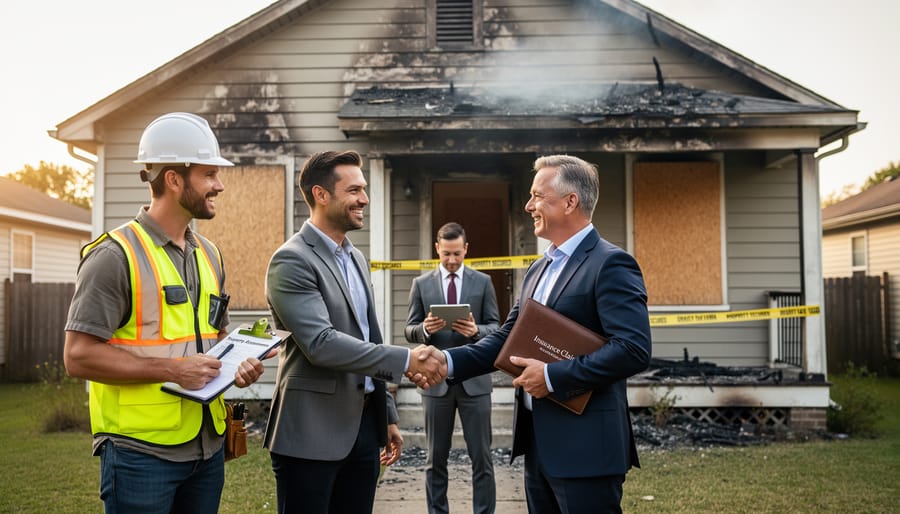
Fire-damaged home buying startups exemplify entrepreneurial innovation at its finest—identifying overlooked market gaps and transforming challenging situations into opportunities. These ventures demonstrate that meaningful businesses emerge when founders combine empathy with execution, solving real problems for distressed homeowners while building sustainable enterprises. For aspiring entrepreneurs exploring adjacent niches like foreclosure acquisitions, probate property solutions, or disaster recovery services, this market offers valuable lessons in resilience and customer-centric innovation.
The trajectory remains promising. As climate events increase property damage incidents and traditional real estate channels struggle to serve distressed sellers, tech-enabled solutions will continue gaining traction. Whether you’re inspired by existing startup success stories or developing your own approach, the real estate tech landscape rewards those who bring both compassion and operational excellence to underserved markets. The opportunity isn’t just financial—it’s about building ventures that genuinely help people during difficult transitions.